
|
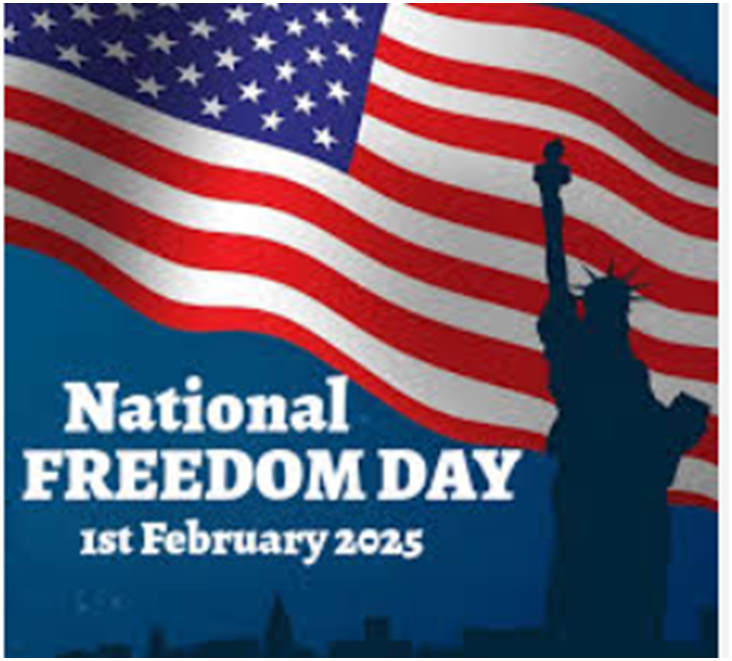
In the United States, "Freedom Day" can refer to two different things: National Freedom Day on February 1st and Juneteenth (June 19th), which is also called Freedom Day. National Freedom Day, established by President Truman, commemorates President Lincoln signing the 13th Amendment resolution on February 1, 1865, which abolished slavery. Juneteenth, a federal holiday, celebrates the day in 1865 when enslaved people in Texas finally learned of the Emancipation Proclamation, marking the effective end of slavery.
National Freedom Day (February 1st) Purpose: To honor the signing of the resolution proposing the 13th Amendment to the U.S. Constitution by President Abraham Lincoln on February 1, 1865, which ultimately abolished slavery.
Origin: Major Richard Robert Wright Sr., a former slave, advocated for a day to celebrate freedom. Establishment: The observance became official when President Harry Truman signed a bill on June 30, 1948, to proclaim February 1st as National
Freedom Day. Significance: It is an observance, not a public holiday, and serves as a reminder of the progress in the fight against slavery and the ongoing global struggle against modern slavery. Juneteenth (June 19th)
Purpose: Celebrates the arrival of Union soldiers in Galveston, Texas, on June 19, 1865, delivering the news of the Emancipation Proclamation and freeing the last enslaved people. Also known as: Jubilee Day, Emancipation Day (in Texas), or Freedom Day.
Significance: It is a federal holiday that commemorates the end of chattel slavery in the United States and calls for reflection on, and efforts to eradicate, the lingering effects of racism |
|
|