

|
|
|
Hind Swaraj (Indian Home Rule), written by Mahatma Gandhi in 1909, summarizes his views on Swaraj (self-rule) as a philosophical and moral concept, not just political independence.
Gandhi critiques modern, Western civilization as the root cause of India's problems and advocates for a return to ancient Indian ideals of spiritualism, simplicity, and village-based self-sufficiency.
He argues that true Swaraj is achieved through Satyagraha (passive resistance) and a rejection of materialistic pursuits in favor of moral self-determination and soul-force.
Core Arguments and Concepts Swaraj as Self-Rule: Gandhi defines Swaraj as not merely an absence of British rule, but a state of inner and moral self-rule, characterized by self-discipline, restraint, and individual autonomy.
Critique of Modern Civilization:
He blames modern, materialistic Western civilization for India's miseries, arguing its emphasis on technology, mechanization, and material wealth is harmful and leads to spiritual and moral degradation.
Critique of British Rule:
Gandhi identifies the British government and their systems (like Western-style law and medicine) as agents of this destructive civilization, not the sole cause of India's problems.
Soul-Force over Force:
He asserts that true power comes from the "force of love and sympathy" (Ahimsa or non-violence), which is vastly superior to the force of weapons.
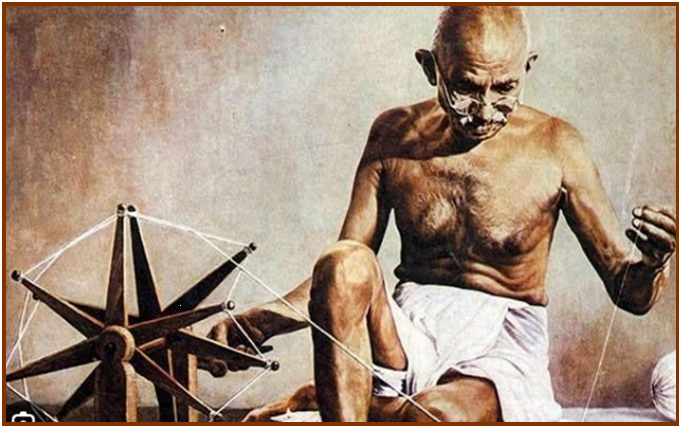
Swadeshi and Passive Resistance: Indians should practice Swadeshi (self-reliance) by rejecting British goods and systems and engaging in passive resistance to demonstrate the illegitimacy of British rule.
Ideal Indian Society:
Gandhi envisions a society built on ancient Indian values of contentment, self-sufficiency, and a connection to rural village life, where people contribute to their community's common good.
Structure and Significance
Dialogue Format: The book is written as a dialogue between an editor (representing Gandhi) and a reader, allowing for a Q&A format that explores the complex issues of the Indian nationalist movement.
Banned and Influential: The book was initially banned by the British government in India for being seditious. However, it played a vital role in boosting morale and articulating the principles that would guide India's path to independence.
|
|
|